

Commercial System Maintenance for Lanham
A building’s plumbing tends to quit on the busiest day of the week. Scheduled visits catch the worn pump, the seized valve and the slow grease line while they are still small jobs, and every visit goes into a written log you keep.
What a maintenance visit covers
Every commercial building has a short list of parts doing the heavy lifting, and most of them live out of sight, in a pump pit, a mechanical room or above a drop ceiling. A maintenance visit walks that list in order. We look, listen, run each piece through its job and write down what we find before moving to the next.
- Sump, sewage and booster pumps, with their floats, alarms and check valves
- Main and branch shutoff valves, turned through their travel
- Water heaters flushed and their relief valves checked
- Drains and grease lines on a cleaning cycle
- Flush valves, faucets and fixtures in restrooms and kitchens
- Backflow assemblies tested when they come due
Valves that still close when you need them
A valve nobody has touched in years tends to seize open, and you find out on the day a pipe lets go and the handle will not turn. Exercising each valve through its full travel, closed and back open, keeps the stem free and shows which ones need new packing or replacing while there is still time to plan the work around your hours.
Small signs worth writing down
The people who work in a building usually notice trouble first. Ask your staff to tell you when they see any of these, and keep a note for the next visit:
- A pump that runs longer than it used to, or starts and stops in short bursts
- A sewer smell near a floor drain
- Hot water running out earlier in the day
- A toilet or urinal that keeps running after a flush
- A sink that drains a little slower every week
None of these is an emergency on its own. Each one points at a part that is wearing, and a worn part found early gets replaced on your schedule instead of in the middle of a busy shift.
Maintenance outside Lanham is laid out on our main commercial system maintenance page. To set up a first walk-through of your building, ask about a free quote, or see the kind of mechanical work we do in the project gallery.
Pumps and the pit they live in
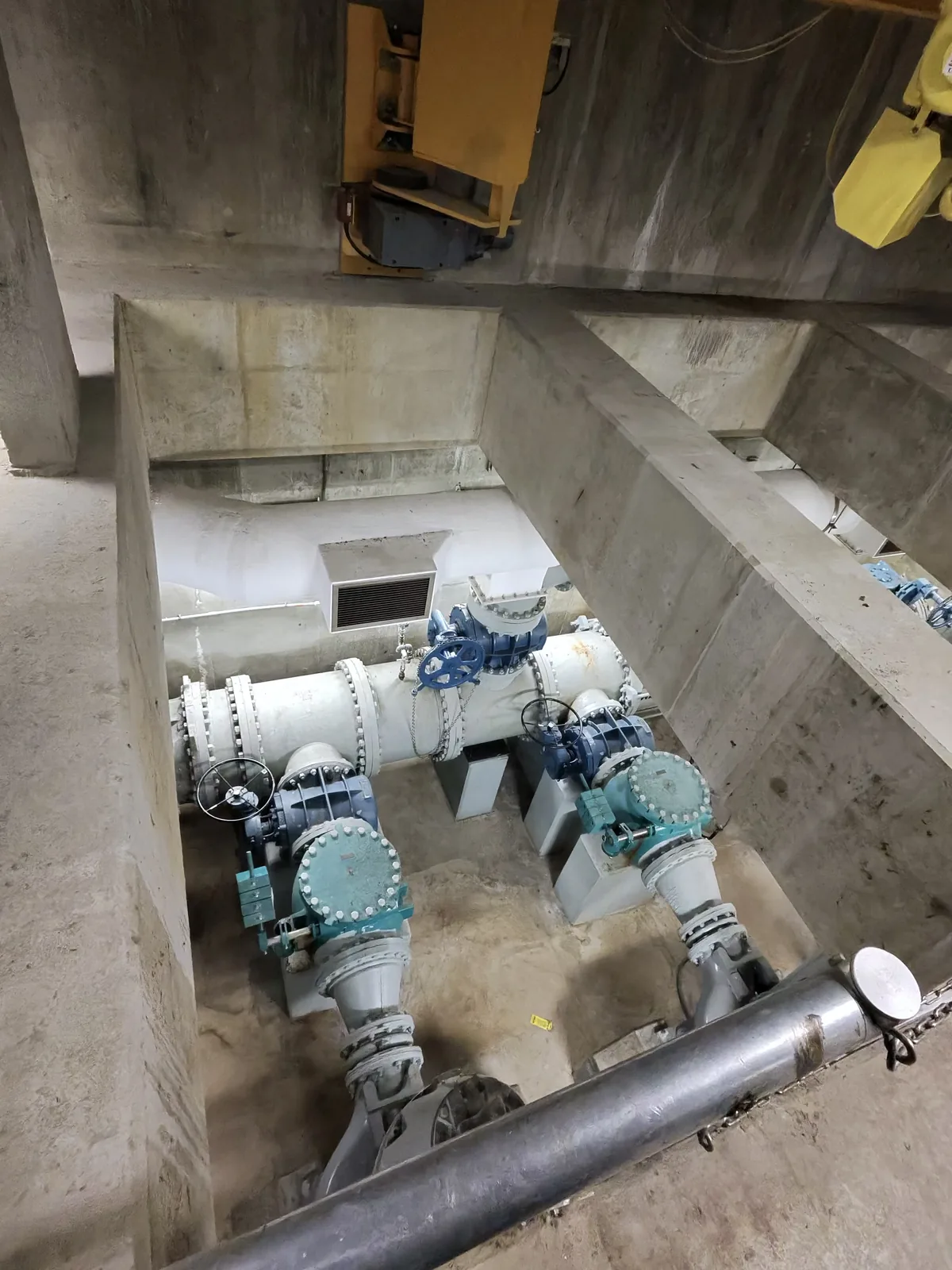
Plenty of commercial buildings rely on a pump pit to lift sewage or groundwater up to the sewer. A duplex setup like the one pictured runs two pumps into a shared discharge header, so one can carry the load if the other fails. Each pump has its own check valve to keep water from draining back into the pit, and its own gate valve so it can be isolated and pulled without shutting the whole system down.
On a visit we lift the floats to confirm each pump starts, stops and takes its turn, listen for bearings and impellers that are wearing, and set off the high-water alarm to prove it sounds. Then we watch the check valves close cleanly as the pumps shut off. A check valve that slams or leaks back makes the pumps cycle harder and shortens their life.
The pit itself gets a look too, for debris on the floor, grease caked on the floats, and anything that could jam an impeller.
- Float switches and pump alternation
- High-water alarm tested
- Check valves closing without slamming
- Gate valves exercised so each pump can be isolated
Water heaters, drains and grease lines on a cycle
A commercial water heater works far harder than a household tank, and sediment piles up faster because of it. Flushing on a schedule keeps the burner or elements from heating through a layer of scale, and testing the relief valve confirms the part that lets off excess pressure still opens. In a kitchen, the grease line between the sinks and the interceptor clogs on a fairly steady rhythm, so cleaning it before it backs up keeps the line open through service. Floor drains that rarely see water get their traps filled so sewer gas stays out of the room.
Restroom flush valves and faucets get checked for running, dripping and weak flushes. Backflow assemblies go on the same calendar, and yearly commercial backflow testing can ride along on a maintenance visit whenever the dates line up.
A visit log the owner keeps
After every visit you get a written record of which equipment we checked, what we found, what we fixed and what is wearing toward replacement. Over a year or two, that log turns into the history of the building’s plumbing. It helps when you plan next year’s repairs, and it answers the first questions a new property manager asks about the mechanical room.
Planned work keeps the doors open
Plumbing that fails on its own schedule usually picks the worst hour, like a sewage pump quitting in a storm or a grease line backing up in the middle of the lunch rush. A planned visit lets you choose the hour instead. Worn parts get swapped while the shop is quiet, water shutoffs are short and announced ahead, and you skip the cleanup bill that follows a flood. When something does break between visits, the phone is answered 24/7, and the log tells us what we are walking into before we get there.
Every building is different, so there is no fixed checklist we force onto yours. A warehouse with one restroom and a sump pit needs far less attention than a restaurant with two kitchens and a booster pump. The first walk-through is where the visit frequency for each piece of equipment gets decided, and it can change as the log fills in.
Scheduled visits from our Suitland shop
Lanham borders New Carrollton along Route 450 and is a short trip from Suitland, so a maintenance stop fits easily into our day. Visit times get set around your opening hours and your tenants.
Set up a walk-throughGoogle reviews for Jackson Plumbing
Brandon Jackson is one of the best plumbers I have ever met. He is professional, honest…
Celestine RobinsonGoogle ReviewsHe is a man of his word. He shows up when he says he is coming and he cleans up behind himself.
T. T.Google ReviewsBrandon was extremely knowledgeable and professional from the moment he arrived.
M. Owens JonesGoogle ReviewsTheir service was prompt, professional, and reliable. The pricing was fair, with no hidden fees.
Wesline ReynaGoogle ReviewsQuestions about scheduled maintenance
How often should commercial plumbing be maintained?
It depends on the building and how hard the system works. A restaurant grease line may need attention every few months, while valves and water heaters can often go longer between visits. We walk the system first, then suggest a schedule that fits the equipment you actually have.
What equipment do you check on a visit?
Pumps and their alarms, shutoff valves, water heaters, drains and grease lines, restroom fixtures and flush valves, and backflow assemblies when they are due. The list is adjusted to the building, so a warehouse with a single restroom gets a different visit than an office building or a kitchen.
Can maintenance happen outside business hours?
Yes. Visits are set around your hours so customers and staff are not disturbed. Work that needs the water off is planned in advance and kept as short as we can make it, and you know exactly when the shutoff starts and when the water comes back.
What goes in the visit log?
Each entry lists the equipment checked, the conditions we found, any repair made and anything wearing toward replacement. You keep the log, so the history of the building’s plumbing stays with the building even when staff or management changes.
Why exercise valves that are not leaking?
A valve that has sat open for years can seize, and the day you learn that is usually the day a pipe breaks. Turning it through its travel keeps the stem moving and shows which valves need packing or replacement while there is still time to plan the work.
Can you service sewage and sump pumps?
Yes. We test floats, controls and high-water alarms, confirm that each pump starts and stops, and watch the check valves close. On a duplex system we make sure both pumps run, so the backup is ready the day the lead pump gives out.
What happens if something breaks between visits?
Call (202) 840-1998 at any hour. The phone is answered 24/7, and because we keep a copy of your building’s visit log, we already know the equipment, where the shutoffs are and what has been repaired before we arrive.
Want the building checked before something quits?
Start with one walk-through. Brandon looks at the pumps, valves and heaters, tells you plainly what is wearing out, and puts a number on a schedule you can hold him to. Call for a quote any hour.